

Hair Coloring Chemistry: How It Works and Tips for Better Results
Contents
Do you know that over 60 million Americans have used hair coloring in this year alone? And that more are going to be joining to hair perming bandwagon? Well, that’s true according to the statistic by Statista.
In fact, it’s estimated that 85% of women color their hair at least once every 8 weeks. With 37% dyeing at home and 22% at the salon.
And this one is even more intriguing…68% of women are reported to feel instantly attractive after having their hair colored.
What does this tell us? That the hair coloring trend has been around for long and continues to catch on.
If you want to also get into the bandwagon, there are a few things you need to know yourself.
Hair coloring can break or make your look. This means it’s important to understand the process, especially if you want to dye it yourself.
But first:
What is Hair?
Hair is primarily keratin, a similar protein found in skin and fingernails.
The regular shade of hair relies upon the proportion and amounts of two different proteins – eumelanin and phaeomelanin.
Eumelanin is responsible for dark-colored to brown to black hair shades. While phaeomelanin is the reason for blond, ginger and red shades. The absence of either type of melanin results in white/ gray hair.
Common Hair Colorants
People have dyed their hair for hundreds of years using plants and minerals.
A portion of these natural agents contain pigments (e.g. henna, black walnut shells) while others contain common dyeing agents or cause responses that change the shade of hair (e.g. vinegar).
Natural pigments usually work by coating the hair shaft with color.
Some natural dyes last through a few shampoos, however, they aren’t really safer or gentler than modern formulations.
It’s difficult to get reliable outcomes using natural colorants, and some people are allergic to the ingredients.
Know the Color Wheel
Know the Color Wheel
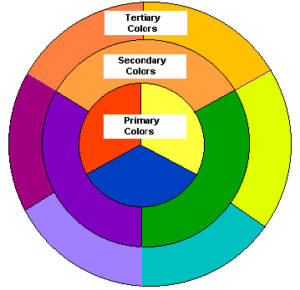
A color wheel is a simple tool that provides an organized way to understand color theory and put it into practice when choosing a hair color.
When picking a color wheel to add to use, it’s best to look for a Color Wheel that includes: Primary, Secondary, Tertiary, Complementary, Warm and Cool colors.
Combining your color wheel with your knowledge of the complementary colors would enable you to know that opposite colors neutralize each other.
For example, too much red will be neutralized with green, too much copper will be neutralized with blue and too much violet will be neutralized with gold.
The Color wheel can also be utilized in choosing colors that enhance harmony.
Identify Your Natural Hair Color Level
Hair color level simply refers to how light or dark a hair color is – the lower the number, the darker the color.
The level system of hair color is a system used by colorists and hair color manufacturers to standardize hair color charts.
The number ranges from 1-12, with 1 being the darkest black and 12 lightest blondes.
Being aware of your natural level helps determine the best shade of hair color to use to get your desired result.
To figure out which hair color level you are, take a section of your hair and hold it away from the rest of the hair.
The section should be from as far back in the crown as possible since the hair around the front hairline is always lightest as it gets the most sun exposure.
You should always look for the shade of hair growing out from your roots that aren’t gray.
Read this: Curl Activator for 4c Natural Hair
Application Procedure
Here is the application procedure:
1. Wear Something Simple:
To avoid staining clothes put on an old robe or button-down shirt so you won’t need to lift a top over your head when it’s time to rinse.
Spread surfaces (floor, sink) with trash sacks or layers of paper you can conveniently trash after coloring.
2. Protect Skin from Dye and Spills:
There’s nothing as frustrating as ending up with telltale stripes of color on your face. Protect your skin against stains by applying a clear solid lip salve along your hairline, including around your ears before applying dye.
To remove any dye splatters immediately they happen so they don’t have a chance to set, have facial cleansing wipes available.
3. Lay Tools Out On your Counter:
Place your tools out on the counter before you start. Make sure you read through the written instructions before you begin.
That way, you’ll be aware of the steps and won’t have to stop mid-process, which results in mistakes like leaving the dye on for longer than necessary or missing areas.
4. Don’t Mix Shades for a Custom Color:
Unless you’re a Specialist in hair coloring, mixing two different shades of hair color is not advisable. The best bet would be to pick one shade of hair color and follow the instructions strictly.
5. Have Extra Gloves Available:
Have an extra pair of gloves on hand to guard your skin against staining when you rinse the color off, in case your first pair are too soiled to be used again.
6. Do not Squeeze from the Bottle:
Get a bowl and brush, like professionals use to mix and paint on dye with little mess and the best even results.
Squeezing the dye out and spreading it on hair may be easy but the result of this method can be messy and uneven.
7. Start at the Top:
Begin applying dye at the roots, since they need more color and more time to set. Then comb it through the remaining hair to distribute it evenly and avoid different shades effect.
Work in four to six sections like salon professionals do to ensure even distribution of hair dye.
8. Look into Two Mirrors:
Coloring the back of your hair can be difficult. Use a handheld mirror to view the back of your head in the bathroom mirror as you color so you won’t miss any area.
9. Highlight hair with a Toothbrush:
When applying highlights, use a clean toothbrush or mascara stick to apply dye precisely and gently.
10. Wear a shower cap over it:
Cover your head with a disposable shower cap while the dye sets to prevent it from dripping while you wait.
11. Avoid Water:
This is essential in making color last.
It has been discovered that water is the main cause of color fade. Your best bet would be to apply dry shampoo at night to increase the time between washes.
It is also advisable to wash hair at the end of your shower to reduce dye exposure to water and when swimming, avoid wetting hair by protecting it with a swim cap or a conditioner.
12. Use Color Enhancing Gloss:
Using a color – boosting shampoo, conditioner or hair-gloss treatment every week between dye jobs can revitalize hair color.
13. Prevent Color from Fading:
Avoid staying under the sun by wearing a hat or other measures to prevent hair from lightening or fading.
New Hair Color Trends for Adding Character to Hair Styles
A new hair color trend comes out and goes away. In keeping up with these trends, you can find a few styles that’ll resonate with your personal style.
Going with a new color can give your hair a new style and effect. When highlighted or a lowlight is used, it creates a dramatic effect that is reminiscent of the latest vogue in style.
Here are a few ideas to use for your next hairstyle:
Solid or Subtle Color Effects
This is a popular haircolor style that highlights one tone or two-tone color with a nice hint of color progression. It starts from a light tone and tends towards the heavy color shade.
Deep brown or red is used hair to add a nice touch to the hair. A mixture of blond can be added to bring up a classy look.
Dramatic Hair Color Effects
This is used to emphasize a highlight, lowlight or medium. It highlights textures and shade that adds effects to the hair. It can be done with a combination of colors to accentuate the hairstyle.
To make it dramatic, a strip of brown, purple, dark or red is added, creating a considerate and striking appearance. It’s useful for emphasizing a specific area of the hair or accentuate the overall head style.
Highlights
This involves a strip of color shades with a nice blend of multiple tones. This gives the hair a good outfit/costume.
Foiling is a simple technique for achieving this look. Using foiling, lowlights, and highlights can be entwined throughout the hair for an enhanced look.
The presence of different intensity and tones gives the hair a distinct look. They can even be styled with red, eggplant or burgundy on a different background.
Hair Color or Perm First: Difference Between Rinse and Hair Dye
When you are interested in changing the hair color, you likely have a question like, “hair color or perm first?”
In most cases, it’s not a simple and easy question to answer. This is because of some of the intricacies of the process.
There are even more questions:
Is there a difference between a rinse and a hair dye? Can you get a perm first before a rinse? And should you get the perm while getting your hair dyed at the same time?
In this article, you’ll learn what all these terminologies are. And how to decide whether you should perm before dyeing your hair or not.
Watch a video overview:
Hair Coloring Chemistry: The Final Showdown
Finally, by employing the chemical process (which can be semi-permanent or permanent), you can change your hair color to lighter or darker as well as the tone.
Semi-permanent fades over time while permanent hair color is more stable. Most professionals are now only using permanent color, sometimes using semi-permanent as a base color.
But before doing this, you need to ensure you can handle the constant maintenance. This depends on the type of your hair and whether you just changed a virgin hair or previously colored hair.
It could be monthly or bi-weekly. And it’s important to prevent fading in the hair.
Also, multiple colors may be required if you don’t want to create a harsh, unnatural appearance. For the best result, the base color should be used with lowlights and highlights in other shades.
Also Read:
We earn commissions if you purchase thru our link. Majority of products aren’t tested by the site owner (except a few). Content is from the research and feedback of users.